Sabado, Hunyo 30, 2012

The Process is Art Itself

I believe that there is always a better process to do things. Early, my father thought me that, aside from being industrious, hardworking and prompt, one must have the proper tools to be able to perfectly accomplish goals. Small or big, tools, and not just sheer talent, matter. And for a profession in design and manufacturing, a simple mistake in the assembly line can cause a continuous, complex and an unacceptable outcome - even a minor flaw in sketching can and may compromise the whole project. This is why I consider, art, together with building science as a design category, a product of a perfected methodology.

In local construction, and in my first decade of practicing design, no drawing is as good if not for fine carpenters, masons, installers and painters. It is their interpretation of your lines or curves that will matter after the blueprints have been released. It is a, seemingly, tedious, sometimes redundant, process that will make or break one's design intention. It actually took me the whole first decade to realize that however great an architectural design is, it is only as good as the understanding of the contractor and the deliberation of his workers.

This is why choosing the best contractor is crucial. There are opportunities that a good house builder may not create a fine office and vice versa. Each contractor, like their bids, methods, equipment and workers, is different. For higher-level hospitality architecture, the choice of workers and their skills can be as significant as the selected wood specie, proportion of tenon and brand of sealer. This is again why, even forgetful architects like me, begin to harness remembering not only the exact furniture, metal bead, stone or tile name but the names of expert installers as well. We also begin to realize that within the group of civil workers like carpenters, there are rough and fine carpenters, furniture-makers and craftsmen. Then there are sculptors - the ones who do not make names after successfully befriending rich gallery owners. They are unsung high-level craftsmen who learned to make design art for a living and not for fame, who can not even afford the pieces they make. They are advocates of local furniture art and the interior architecture industry without them knowing it.

They are heroes of the process - the process that, like mountain cycling, is continuously changing, undulating, technical and challenging. If not, the product is just a product.

Linggo, Hunyo 17, 2012

Cycling Father's Day and Everyday

Today, Father's Sunday and during the start of the June rainy season, I got lucky early to ride the morning without the hassle of tricky drizzle. It was a well-sought window as more cyclists climb up Mangga (a famous 800-footer cycling stop along Sumulong hiway) with seemingly cleaner bikes from, maybe, a wet week or 2 without peddling. It was the usual nice sight and quick climb with grayer skies and a little tarmac shin that even tempted bikers to climb longer, loop Antipolo or ride as far as Bugarin. While I, luckily again, after surviving the big ring today, settled for the usual quick backtrack right after coffee so I can spend more of Father's day at home.
The lucky streak started as early. Even after wrestling a tiring pool party with the toddler the night before, and after a series of rushing deliveries for 2 turnover-ready projects, I was able to get up early, without much snoozing, and even help prepare breakfast. I even had extra time to enjoy the wife's epic milk tea as a fine relief to overeating overly sweet chocolate bars or chancing on leftover wafers neglectedly chilled inside the refrigerator. These, and with unconfirmed ridemates, allowed me to choose a freer destination. It also let me well select an appropriate and comfortable cadence without peer pressure. Though I will normally prefer a leisurely ride with a ride buddy, sometimes, riding solo make one appreciate the clear pristine Sundays a lot.

For a busy cycling father like me, smaller details matter. The weapon of choice for the rainy days is the old, tried and tested rigid aluminum mountain bike. Though it is far more exciting to use the steel Maldea now, I can't really afford time to overly clean a too muddy bike while keeping it totally rust-free. It will also be advantageous for the next race which is expected to be right in time for training more mountains and getting back my cadence. Even if it's harsher, at least, the power transfer on the alloy MTB is much more evident and forgiving - so I get to finish the XCM race as strong, or hopefully stronger, compared to last year. The alloy MTB also does not require a more polished finish too. As long as the brakes are clean and the drivetrain is clear from trail debris, this bike is good to go anytime and ready for all kinds of roads or weather. If I don't get the new wheelset for the CX Maldea in time, I am sure to race the rigid MTB again for Philmofo.

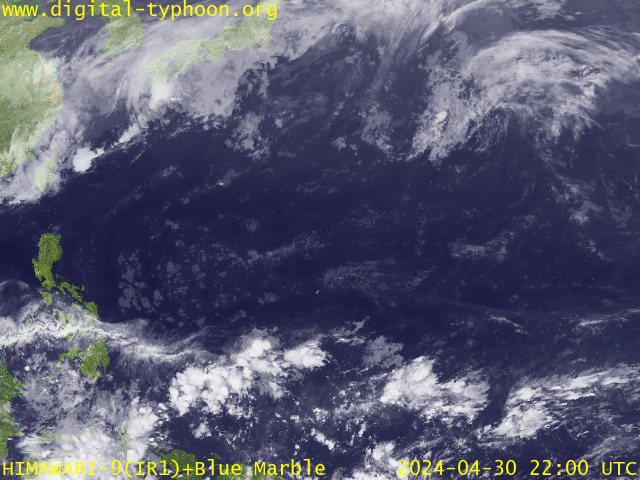
Speaking of weather, although it is addicting-ly fun to ride in all hardcore-looking glory of mist, dirt and mud, we try to avoid being too exposed to wet riding. Aside from avoiding getting sick, it is a lot safer to bike on dryer roads and trails without having to compromise speed and cadence much. By minimizing the risk of injuries too, we can devote more extra time training and having fun. To keep a heads up, I bookmarked this site and check it almost everyday for both work and play. But the common climate sites are fine, except I liked the simpler blue and white satellite photos and I prefer to graph the cloud movements myself and not rely on usually vague weather reports. You can't go wrong with Japanese, I guess, so here is my favorite site and link as my personal default: when biking, motorbiking or even bringing the sedan to work.
http://agora.ex.nii.ac.jp/digital-typhoon/region/pacific/1/images/640x480/latest.jpg

The best parts after some serious early morning cycling is that I get to finish faster, stronger and more accomplished. Luckily and even not during Father's day, given the (supposed to be) improved sporting regimen I try to follow now, I still have some strength to sprint with the kid, more opportunity for creative work, still have time to clean the bikes and do house chores - making the wife a tad happier and a level more lenient with new bike parts.


Sabado, Hunyo 02, 2012

After almost half a year, a handful rides and almost a forgotten password, I am glad to face the netbook again and write something more significant than what appears to be a commercial phone review. I am also glad to announce that after a series of races, the young Galaxy is still intact and now, confidently and without much ado, sits in the middle jersey pocket conveniently - appearing still quite promising, resilient and feasibly ample as I expect my cellular device should be. And aside from the usually reliable Runkeeper app, it also takes able Instagram photos saving me from bringing the precious LX3 and buying another expensive cyclocomputer.

What I am most glad though is that, after turning over some first quarter projects and celebrating Ice's first birthday well, I am able to develop a fine riding habit that works perfectly for a rookie dad-cyclist/budding entrepreneur like me. We were also able to open a small furniture line that focuses on new and austerity pieces that combines sustainable quality with top level design process using the bikes as our main mode of transportation. Hoping we grow a process and develop apprentices that will follow the sustainable path, I guess, it seems to be one of, if not, the biggest design accomplishments to date.

And finally, I guess, with the regained writing-riding streak, the Maldea will hopefully have a decent write up as well.

Linggo, Disyembre 18, 2011

Heart Shaped Lugs


Again finally, and actually after a delayed post follow through, I am able to put some words and little justice to a fine bike especially made for me. The custom-sized steel cyclocross frameset made by Ave Maldea is one of the finest cycling equipment I rode. It actually traveled a handful of rides already, trailed, survived some rocks and, fairly, raced against other machines.


For a more comprehensive review, I will try to post and back flash the old and new ride photos to come up with a more detailed narrative of how each aspect of the CX worked for me well. Aside from being a best fit to my size, it allows for a ride plush and comfortable for the type of roads me and my cycling partners traverse. It also appears to be a brand new classic and an obedient training buddy so far - rendering my weekly views of the countryside a little more photogenic.

Although I must admit that the CX's geometry is not as nimble as my previous road bike, I settled for bike dimensions that is most comfortable. Early, given the significant addition to weight, I already knew the bike may not be as fast. Ave Maldea, using his precise measurements, assembled a slightly sloping frame and a forgiving head tube that is matching my ergonomics and ailing back. It was perfect for touring and for long rides on and off the pavement. Though I raced it only once, I am guessing it needs a lot of tweaking especially for road races - or my legs need to improve (a lot). This required me to keep a shorter stem and use a lower dropbar to reach a faster position when climbing the hills or sprinting.

Aside from the plush geometry and being enemy to rust, the Maldea appears classy in most, if not all, angles. The welds are almost immaculate and is quite a looker during and especially after a hard ride. The brazes appear like carbon fiber joints except that the dull gunmetal finish made the frame look more solid and robust as well as, hopefully, make the trees look better when taking ride photos. My choice of hi-ten steel also kept it from looking overly slender compared to full cromoly framesets while saving the wallet still.

The fork though is classically lugged cromoly - a complete contrast to sleek carbon fiber blades I initially envisioned. Originally, with a limited budget from edgier forks, I had no success in Quiapo and Cartimar searching for unbranded equivalents. This forced me to allow Ave to complete the forkset and assemble the front end too. With a set of refurbished mid-level components, I guess, deciding for the bulletproof cromoly, with classical heat-shaped lugs, was worth it to embellish a little more interesting front side.
Overall, the Maldea CX is a feasible bike worth it and worth the wait. It took me almost 3 months just to line up for a bare set from Ave, plus the few more weeks just to find the unassuming place of an expert and rare Filipino bike welder. It also took me another 3 months to almost finish trying to render the bike myself and making the old drivetrain work without (too) much ado while breaking a handful of house pulleys. It is a solid  bike as usual that I can bring anywhere - as long as the downpour is forgiving or if there is penetrating oil at hand.

It is my first Maldea bike, my first experience on trail on a 29er, my first custom and my comeback to personal spray-painting projects. While it is only my second road race-capable bike, third steel, and one of my heaviest, I can't wait to ride it again.

Riding Smarter

It’s almost the weekend and it is disappointing not being able to ride when most of the week’s works were finished early. It has been raining since the night of Thursday so any hope of the usual Friday jumpstarter ride has been cancelled. And because we, architects and design professionals, usually need inspiration to design, most of the time (ironically) we have to exhaust our body (run, bike, drink and party) to actually fuel the mind. It’s normally a surefire way in getting those creative juices flowing and getting the job done in a healthy way.

The past few weeks were probably the busiest for us this quarter. I was only able to run less than 5kms. So to make the new phone more useful, I changed the Runkeeper to mountain bike settings and logged an even more pathetic 6km total bike commute. I was hoping to start my (used to be) regular 100kms-a-week ride when we finished work early yesterday, but with such taunting downpour, even just 10kms seemed blight on the pedal.


Today, with rain and the gift of ‘pause’ (as inspired by Bo Sanchez ), I was able to take the chance to write again and continue my pending phone review. Having Samsung’s Young GT-S5360 or Galaxy Y for almost a month now, I can better attest to its capabilities and incapacities clearer.


For motorcycling with the thinnest gloves on, it was quite difficult to use the minute capacitative screen. And even with half-fingered gloves (as stated in the previous review), it would be easiest to use the keypad if you have petite women’s candle-like fingers. When it comes to competitive bicycling, except for Audax, racing with such a pretty phone on a criterium or closed-circuit time trial road race is never advisable. Though the Galaxy Y may be the smallest smartphone, it is not as handy and very slippery without the gel-type case protector. It could, however, pass as good company for selective training and sports-touring.

Easily, Samsung’s B2100 or Nokia’s 3720 would beat the Galaxy Y in any given weather or road condition. Being more handy, tactile and rugged, these marine-rated waterproof and shockproof phones even boast LED flashlights that may replace a Cateye headlight if necessary – making the smallest Galaxy far from barely qualifying into the hardcore phone list. There is also the Samsung Xcover smartphone, with a hifalutin IP rating you can only see in industrial lighting materials, which would easily be the popular choice of the executive cyclist with the usual robust taste. The advantage of the slim Y though is its ability to fit into smaller armbands or just slightly bulge from the compression shorts.

Honestly, although I needed a smarter phone than my previous, I never wanted a Galaxy or a smartphone initially (nor did I have any plans to go snorkeling or mud-wrestling with it). My few additional requirements for another bar-shaped cellular phone were to send legible emails quickly and bring it on any road and off-road trip without too much thought. (This maintained the Young’s few advantages). Like all my other phones surviving makeshift Ziploc-like wraps and a few bike spills, the price was the deciding factor after passing reliability concerns and aftermarket guaranty. The Young is a simplified device that works as a proper phone that I can always afford to replace at any given time. In case it gets lost along with site scaffoldings. stolen or accidentally gets dropped in the single tracks, it would not be as heartbreaking as compared to losing or breaking a seamless iPhone, or a more sophisticated Blackberry or HTC.

To our surprise, when the wife agreed to retire the broken 2600, we were shocked by to see dirt cheap touchscreen smartphones displayed alongside the mall’s branded shelves. Amazingly ultra-affordable (meaning way way below budget), the entry-level Samsung Galaxy Y and the LG Optimus Me toppled my first Nokia choices at almost any angle. With a minimalist façade (similar to the classic iPhone) and a bunch of freebies - free GPS, free Google maps, free Gingerbread applications - the very basic Galaxy-Android proved to be worthy jersey pocket material to a frugal cyclist like me. And without much effort, it blended with the tire lever and Presta spares, as if proprietary and not an after-thought.

It has become a fine reliever to the aging laptop and netbook, and emails decently with one hand (with the other hand carrying Ice). Aside from convenient social networking, sending work reports and jobsite photos from almost anywhere were no real problem – giving me more time to bike and save enough money for the next bike ride. I can’t wait.

Lunes, Nobyembre 21, 2011

Riding Smart


This is, probably, not the most sophisticated cellphone out in the market now. It is light and may be the smallest smartphone of its kind that I held. Using it for the first time actually put me at halt, literally. I had to stop, even when just walking. Typing on its small touchscreen keypad is tricky with my medium-sized, imperfect, and bike-deformed fingers. It is worlds apart from my old Nokias, and may even rate the lowest when it comes to my requirement of ruggedness and usability. But for combined frugal biking, working and training, it appears quite fit where it's worth.


It is too early to conclude since I just got the unit. I have yet to test the capabilities of the Samsung GT-S5360, for at least a year, on the road and until the warranty period. Better-known as the Galaxy Y, (Y for young), this phone may best work for those with youthful social needs and candle-like smaller fingers. For its online features, it seems to be a great deal for its range of affordable smartphones. It can decently connect to the internet and send emails outside the office. Like a tiny PC and phone in one, it is a good tool to work and play, and it is not that bothersome to put it in the bike jersey pocket.


Like typical cellphones, it has a built-in camera.  With a few swipes and without the need for rare, specific phone cables, it can send photos directly online or to subscribed recipients and selected clients. It packs enough storage to store all pictures, messages, notes and files into an ample memory, which can even expand to a 32GB card. Contacts can also be easily transferred or synchronized at a whim, making easy and reliable back-ups at hand.


But the Galaxy is still up for the true test. Like my old Nokias, Motorola, Siemens, etc, it needs to be road-worthy, otherwise, I will opt to go back to the ever-reliable and dirt cheap bar phone again.

It breezed through a few long drives and fast runs. The applications worked as accurately on such good weather and in fine road conditions. Also, the battery, after some breaking-in and being fully-charged, showed some potential after almost 3 days of stand-by power.


Well-charged and packed with GPS and a few cycling apps, the compact Galaxy should alternate with the wireless Velo well, I hope. We will see if riding with a smartphone is comparable to a cyclocomputer. I can't wait to pedal smart soon.

Linggo, Nobyembre 06, 2011

Sundays are the best days to bike, so it feels quite disappointing not to ride out the only day that overtakes the usual driving-frenzy Manila. Even if I bike almost everyday, I never liked a still weekend unless, maybe, it is with family  or friends out in the beach . Normally, I ride out early enough to get home for lunch or leisurely pedal the whole day if given the chance. Although the ber-months provide better cycling weather, I do not mind the extra-ordinary heat nor the rain unless it will compromise time. There was even a peroid that I was addicted to riding muddy trails until I realized that spending more time cleaning the bike than riding it does not make enough sense for someone a busy architect. Though I do not hate cleaning the bikes, as it keeps my cheapskate components rust-free, too many hours spent on it takes so much of the quality after-bike 'cooldown' time.

This unlikely damp Sunday interjected thunderstorms as if it really wanted me to do something else. And probably because of some lightings as well, it could have disabled the broadband connection and scrapped the attempt to pedal today. This allowed me to grab a Fortune magazine again and read more, spend time with Ice and finally savor our refurbished makeshift office desk and continue to write once again. Hoping I can take better pictures too.